Finding the Literature Intern Lecture
Nikhil Dhawan, MD
Created: 2022-01-31 Mon 19:55
1 The past
- Let's say you are a psychiatrist 100 years ago.
- What would you and the older generation of physicians have at their disposal to understand and heal patients?
- Clinical observations, charts, some books that they might have been able to find at a library they had to go to, correspondences via letters, conferences ? ? ?
2 Historical observations
- Despite this, lets look at descriptions of patients by some old-timers:
3 Carl Wernicke
- "All symptoms of brain disease are, as you know, either focal or general… whereas mental diseases do not present these focal symptoms, consequently mental diseases represent general diseases of the brain"
- Outline of Psychiatry in Clinical Lectures (1899).
4 Emil Kraepelin
- Dementia Praecox
- https://archive.org/details/lecturesonclini00kraegoog/page/n41/mode/1up
- Table of Contents of Lectures of Clinical Psychiatry (1904)
- https://archive.org/details/lecturesonclini00kraegoog/page/n19/mode/1up
5 Bleuler
- "In contrast to the organic psychoses, we find in schizophrenia, at least with our present methods of examination, that sensation, memory, consciousness and motility arc not directly disturbed." - Bleuler Dementia Praecox or Group of Schizophrenias (1911)
6 Lasting expressions
- These are beautiful, nearly poetic descriptions of patients and their mental status exams.
- These are mostly expert opinions compiled from clinical experience.
- You can still see the influence of these anecdotal accounts in our diagnoses, for better or for worse.
- We can do better now. We can make decisions based on rigorous empirical observations through clinical trials.
7 Empiricism vs Expert Opinion
- Expert opinion is a low form of evidence
- Following experts has led to the perpetuation of incorrect beliefs for thousands of years, for example, the four humors of medicine.
- Empirical research helps us develop ever evolving theories that match our observations.
8 What do YOU have available to you to learn?
- PubMed has 33,000,000 citations.
- Nearly the entirety of biological and clinical trials are indexed here.
- From the index you can find nearly all the articles through the library website digitally or, at worst, through interlibrary loan.
9 For your patients
- "To study the phenomena of disease without books is to sail an uncharted sea, while to study books without patients is not to go to sea at all." - Sir William Osler
- So whatever you get out of all the evidence-based medicine lectures, please read, and take ownership of your education.
10 Goals of lecture
- Difference between narrative and systematic reviews
- How to find narrative reviews.
- How to find clinical trials using PICO methodology.
- Know how to use AND's and OR's in PubMed search.
11 Foreground and background knowledge
- Foreground - Does Risperidone cause increase chance of strokes in patients with Alzheimer's Dementia and psychosis?
- Background - What's the treatment or what's the prevalence of psychosis in dementia?
11.1 Finding background information
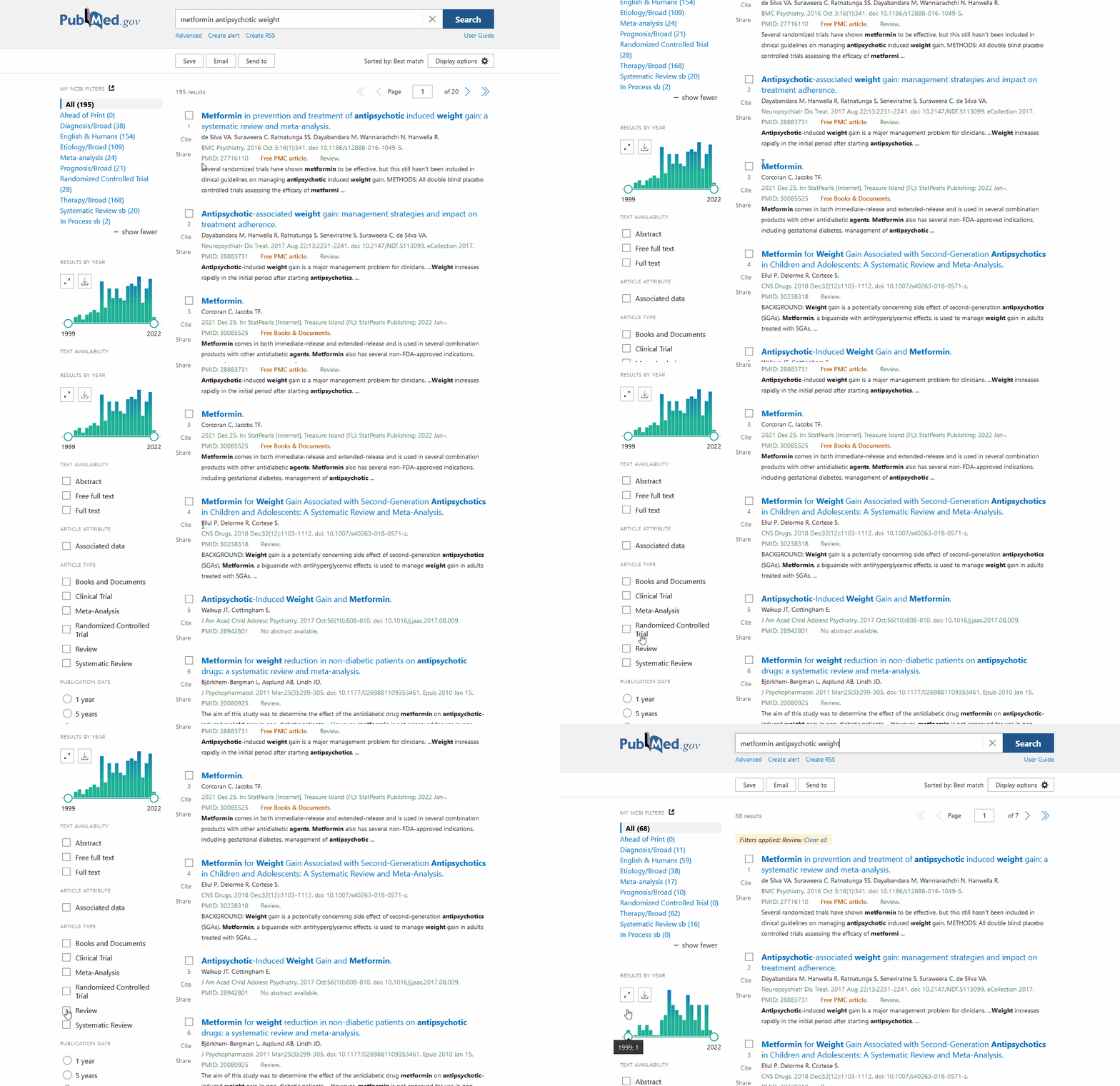
- My preferred way is to find a high quality expert/narrative review. by filtering for reviews on the left side of PubMed.
11.1.1 UpToDate
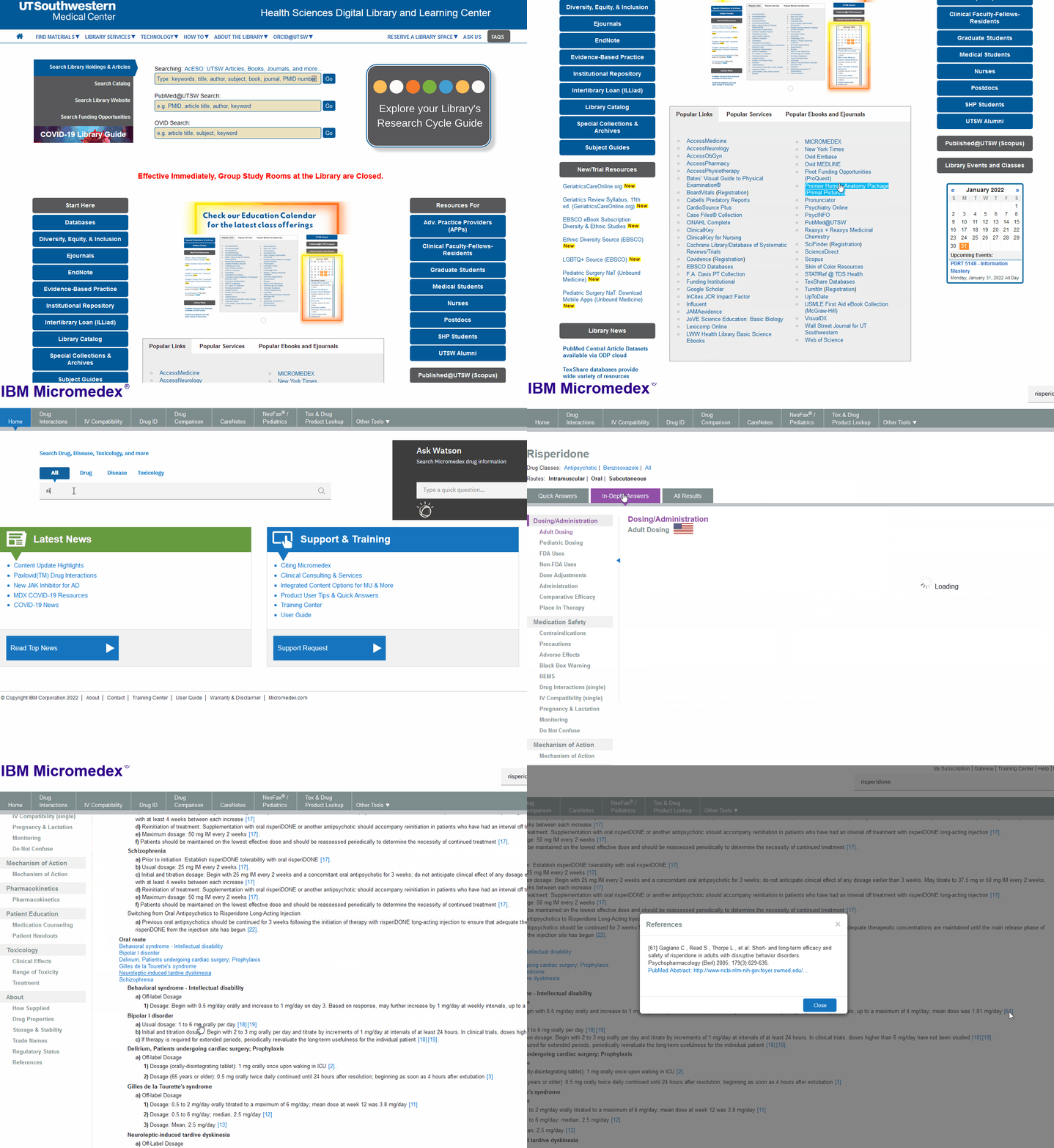
- UpToDate is an compiled evidence-based clinical resource
- It is peer-reviewed (anonymously).
- There have been some controversies, but overall it is a good starting point.
- It has a bibliography.
11.1.2 Micromedex
- This is a psychopharmacology resource.
- The "In-depth answers" section has off-label indications.
- The off-label indications often have clinical trial citations so you can look at the evidence yourself and make a decision.
11.1.3 Micromedex
11.1.4 Textbooks
- These go out of date quickly. They tend to be mostly expert opinion/narrative reviews.
- That being said the DSM-5 is an authoratative source and every psychiatrist should read, at a minimum, the chapters of commonly seen diagnoses like MDD, PTSD, Schizophrenia, Schizoaffective, Bipolar disorder, borderline personality disorder, and addiction.
- Kaplan and Sadock's Synopsis of Psychiatry is another authoratative source.
- I like it for the mental status exam.
- I also like Carlat's Medication Fact Book which is updated yearly.
11.2 Reviews
- Through PubMed you can also find similar information that are in textbooks with reviews.
- When you filter for reviews you will get narrative or systematic reviews.
- So what's the difference?
11.2.1 Narrative Review
- A narrative review is similar to a book chapter that discusses a subject's broad points.
- For example, a review on alcohol use disorder, could discuss prevalence, diagnosis, treatment options, pathophysiology, epidemiology, natural history of the disease, and risk factors.
11.2.2 Systematic review
- A systematic review is similar to a clinical question where instead of people as participants, the participants are papers on a specific topic.
- For example, you could have a systematic review on metformin as a treatment for antipsychotic-induced weight gain.
- This is a very narrow topic.
11.2.3 Metformin systematic review
- Systematic review will do statistics on the papers, for example, how many showed an effect and how many didn't.
- Methods will include the inclusion/exclusion criteria of the studies and the search methodology to find the studies.
- https://pubmed-ncbi-nlm-nih-gov.foyer.swmed.edu/27716110/
12 Searching PubMed
- So let's look at PubMed.
- Log into PubMed through library website.
- Start at http://library.utsouthwestern.edu
12.1 Using a narrative/expert review to find a clinical trial
- Broadly search and find a "wordy" or narrative/expert review (journals like NEJM, Lancet, JAMA, molecular psychiatry, JAMA psychiatry, Lancet psychiatry)
- Skim review to learn terms to search for, especially, look for terms for outcome measures, interventions, and population terms
- Join synonym for each letter in PICO with "OR" and enclose in parentheses. For example, (psychosis OR schizophrenia OR schizoaffective)
- Search with your search terms and filter for clinical trial or randomized clinical trial. You can filter by using the click boxes on the left side of PubMed.
12.2 Searching for a narrative review
12.2.1 Search through big journals for big topics
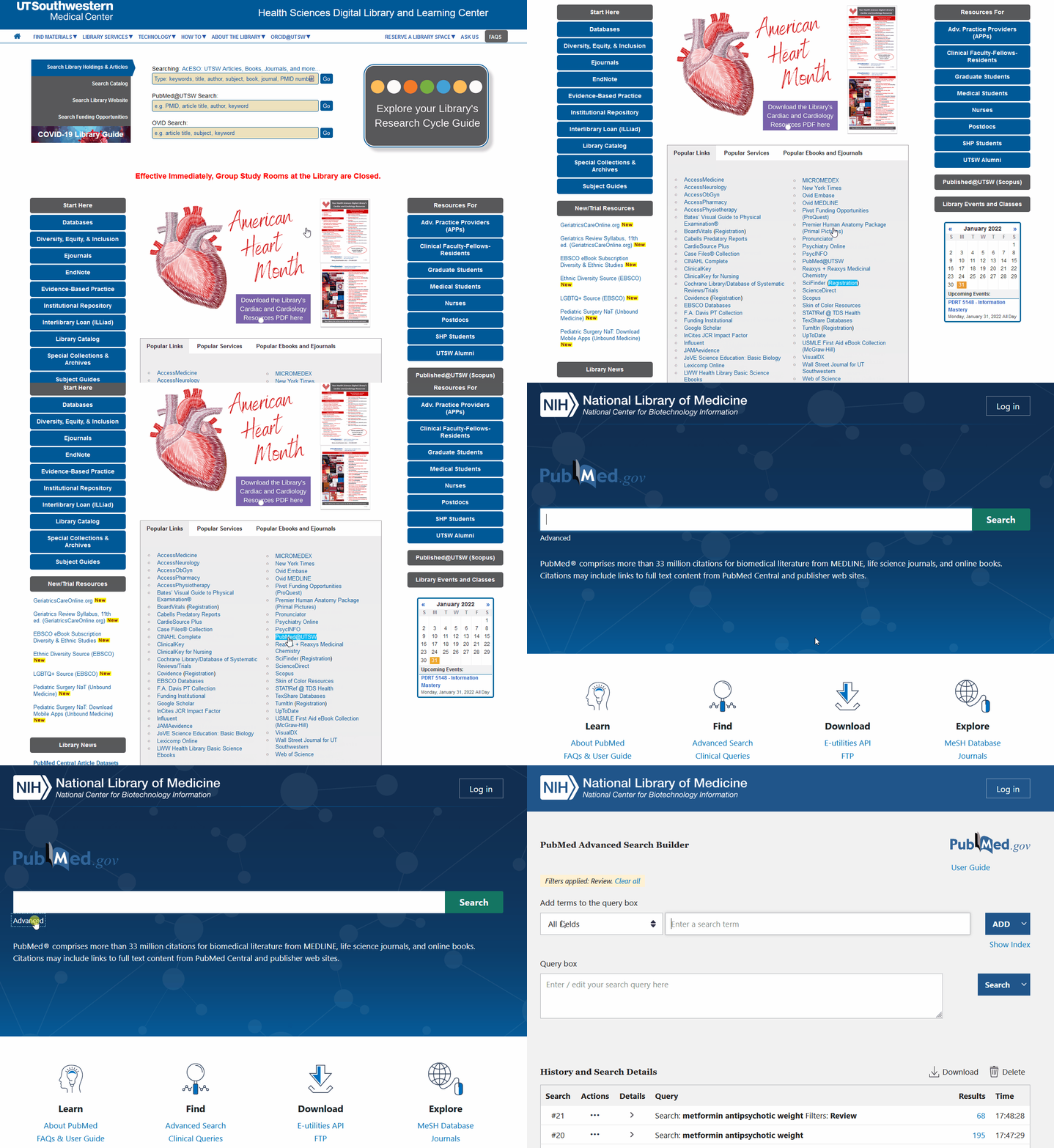
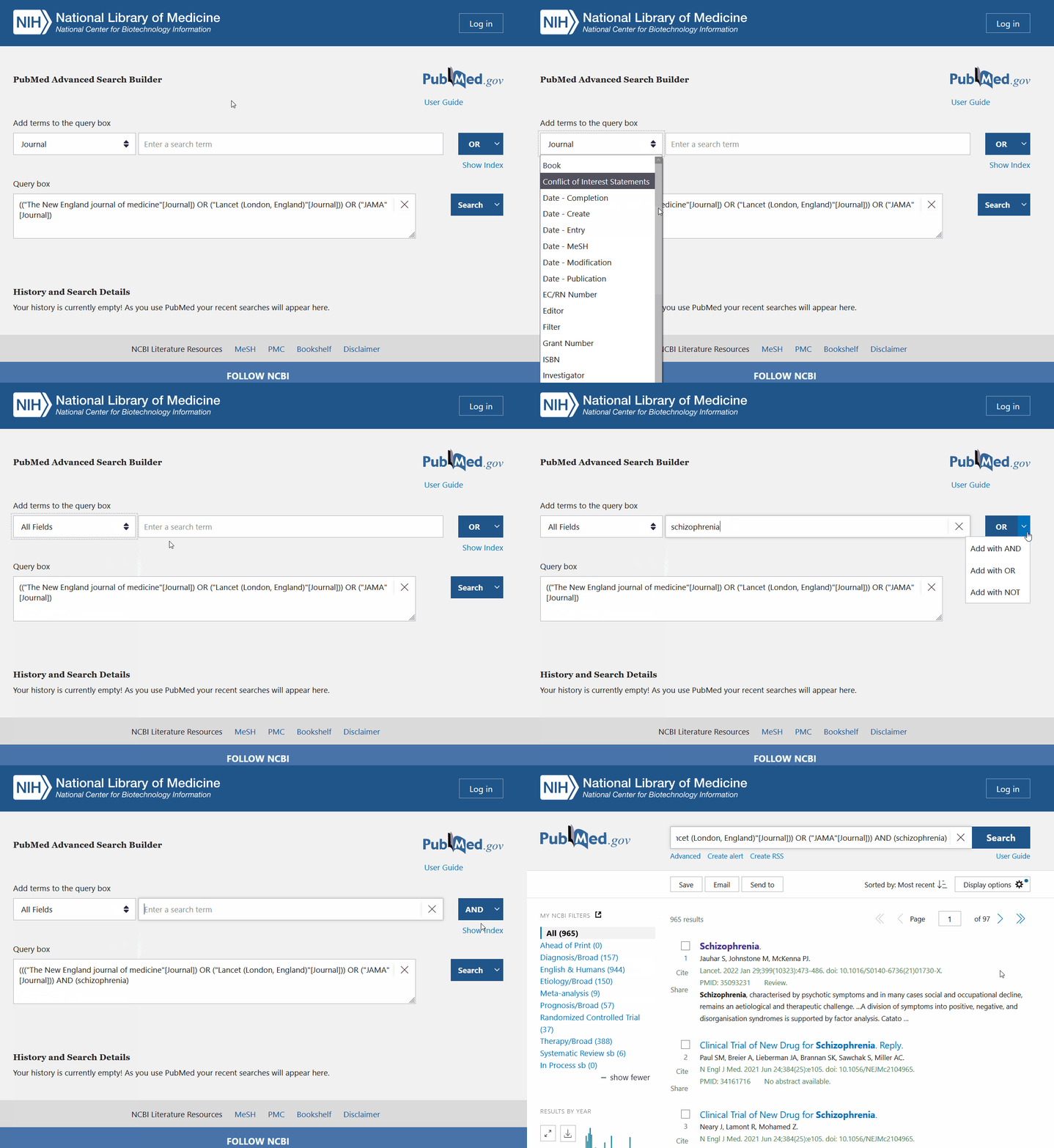
- Search for specific journals using the advanced search feature of PubMed
12.2.2 Search through specific journals
- For big topics like bipolar disorder/alcohol use disorder, you can look for reviews in NEJM, Lancet, JAMA.
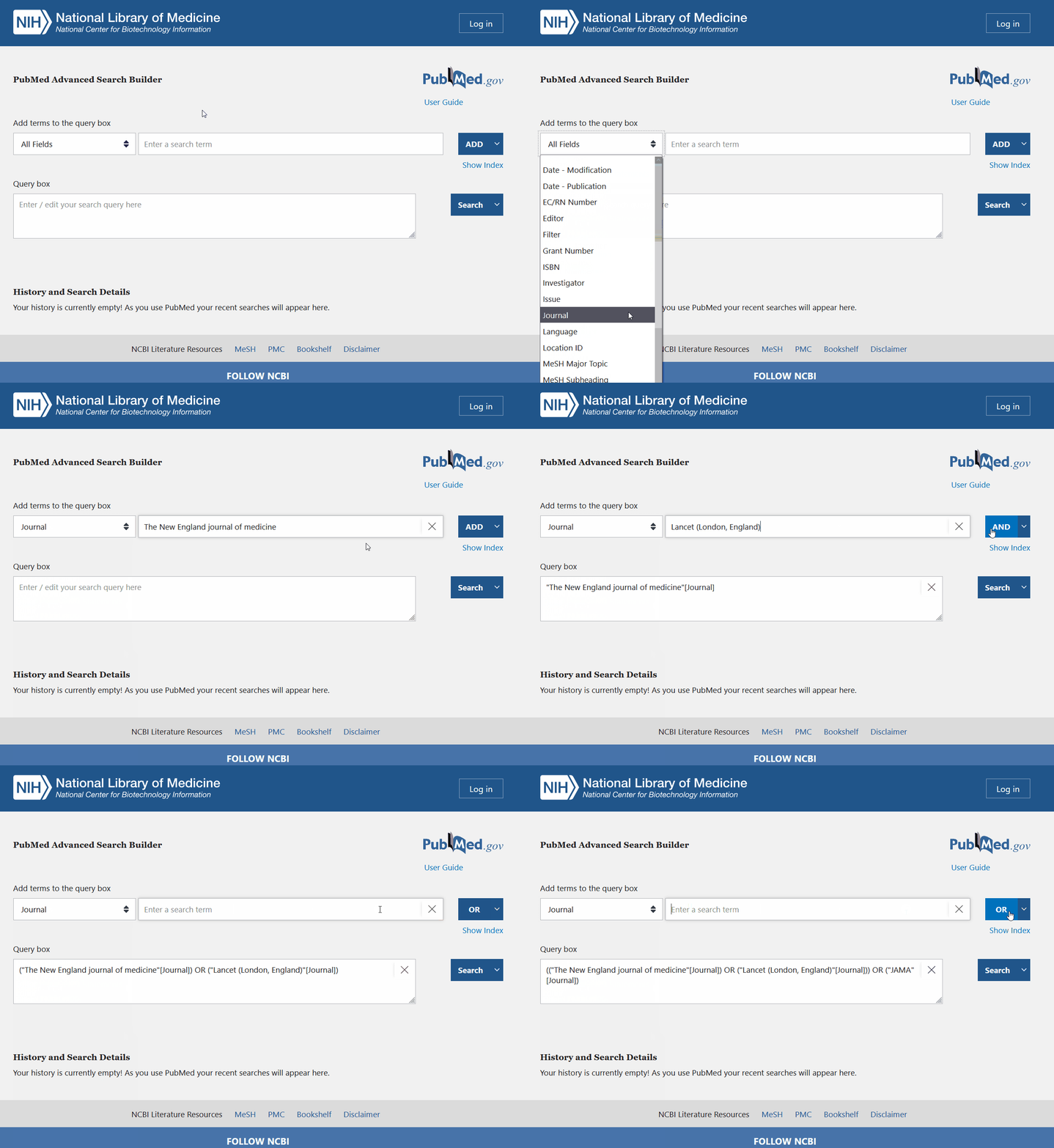
- Combine the journals with an 'OR'
12.2.3 Search for your specific subject
- Search with an 'AND', but change the field from journal to "Title" or "All Fields" or "Title/Abstract"
12.2.4 Filter by review on the left
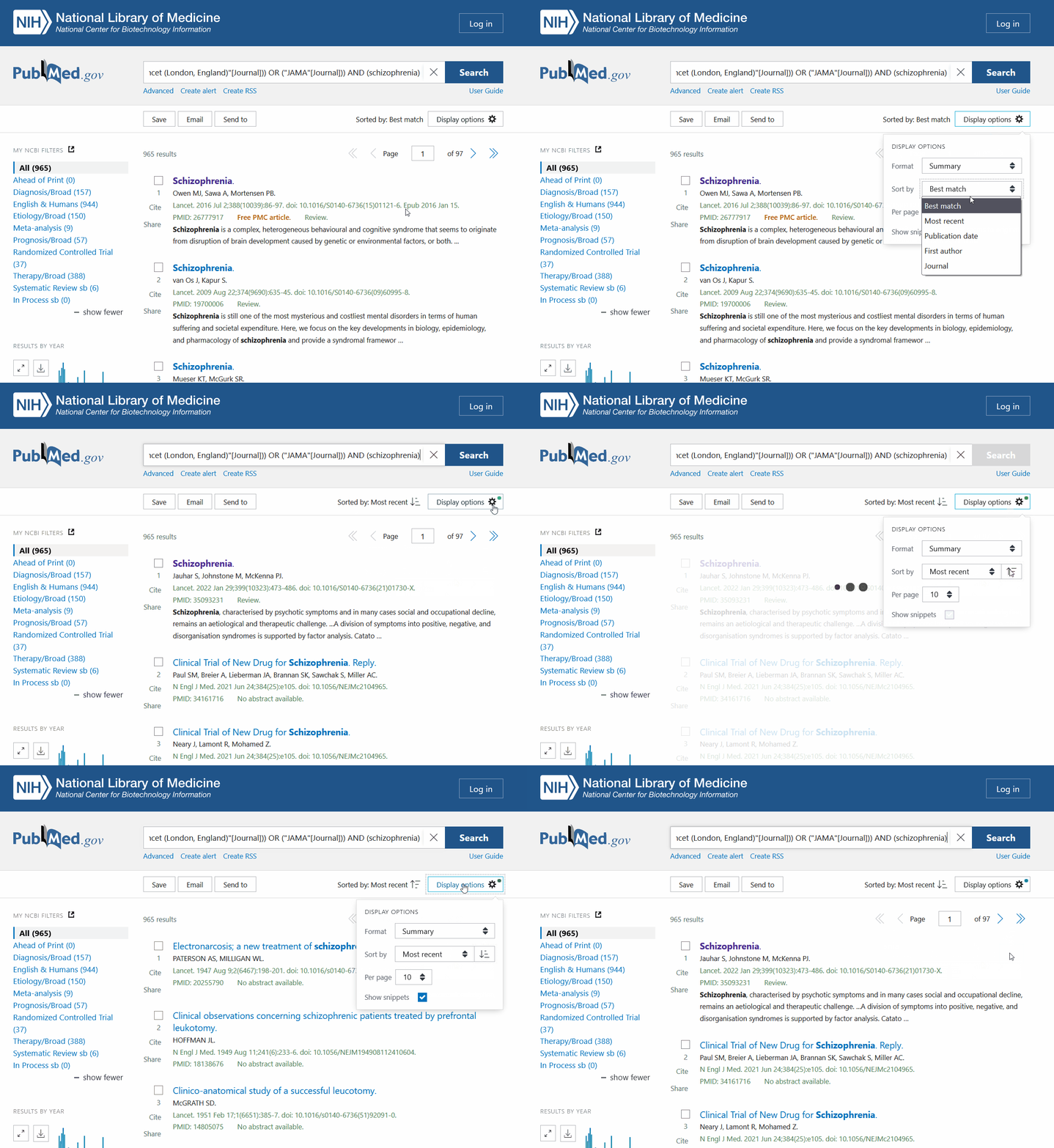
- As above you can filter on the left. For this search, we don't need to.
12.2.5 Look for the most recent article
- Let's look for the most recent review.
12.2.6 Let's take a look at the article
12.2.7 Skimming the clinical trial
- So we see that the population term of "acute exacerbation" may be useful
- The outcome scale used was PANSS.
12.3 Side note
- The search can also be done with tags. So to search for reviews in those journals you would add these keywords.
- ("The New England journal of medicine"[Journal] OR "Lancet"[Journal] OR "JAMA"[Journal]) filter[review]
12.3.1 Example
- To find review articles on Schizophrenia you can search the term schizophrenia and add the journals and filter as above.
- [schizophrenia ("The New England journal of medicine"[Journal] OR "Lancet"[Journal] OR "JAMA"[Journal]) review[filter]
- search here
- You can find a list of tags on the PubMed website at: https://www.scripps.edu/library/open/instruction/PubMedfieldcodes2012.pdf
13 PubMed Tags List
- In PubMed text box you can use these tags. For example you can search for articles by Pliszka in 2018 with the following “pliszka[au] 2018[dp]”. You can look for articles in lancet with “lancet[ta]”.
- Title [TI]
- Title/Abstract [TIAB]
- Author [AU]
- Journal [TA]
- Language [LA]
- PMID [PMID]
- Publication Date [DP]
- Publication Type [PT] = review, clinical trial. full list
14 Finding foreground information (clinical trials)
- To search for a clinical trial, let's roughly think of what a trial contains.
- We select particular participants for example, acute exacerbation of schizophrenia, or patients who gained weight on antipsychotics.
- We have a particular intervention, for example, an antipsychotic or metformin
- We have a control group, for example, placebo or "treatment as usual"
- And we measure the difference between the comparator and the intervention group on a particular outcome such as the PANSS scale or weight.
15 Searching using PICO methodology.
- Use the PICO methodology to create search terms to find a trial.
- P - What are the characteristics of the Patients in the trial?
- I - What is the Intervention being studied?
- C - What is it Compared with?
- O - What Outcomes are measured?
15.1 P - population
- In a study this is the inclusion/exclusion criteria of the participants in the study.
- You often include the diagnosis that you are looking at.
- You can't search for anxiety. that's not a diagnosis but a symptom. instead you need to look at major depressive disorder or bipolar depression.
- Use a narrative review to find out what population terms are used.
15.2 I - intervention
- This is the independent variable of the study.
- The variable that is changed to determine if it effects the dependent variable or the outcome
- This is often a medication or therapy.
- You can put the specific class of medications, but it's best if you just list the different medications with the word 'OR' in between.
- (fluoxetine OR sertraline OR citalopram OR escitalopram OR paroxetine)
15.3 C - comparator/control (optional)
- This is the control group/comparator. I often leave this part of the search blank just to be more inclusive.
- But you could put placebo or a specific comparator (treatment as usual, for example)
15.4 O - outcome (scales)
- This is the outcome that you are looking for.
- In science you have to operationalize the outcome.
- You have to turn the outcome into some kind of measurement.
- Look at a narrative review to find out relevant outcome measures/variables
15.4.1 Outcomes or dependent variables in psychiatry
- This is one of the biggest challenges in psychiatry.
- How do we convert "mental phenomena" like depression or anxiety into observable/measurable data?
- We do this often using questionnaires or scales.
- Therefore, the best way to search for a clinical trial is to use the scale that you would expect to be used as the outcome.
15.4.2 Other outcomes
- You can put mortality, relapse, abstinence, suicid*, adherence.
15.4.3 Clinical Scales
- Like we saw with the schizophrenia clinical trial, the positive and negative symptoms scale or PANSS was used.
- For the outcome part of the PICO search you can see this list of scales for different disorders.
- I have a list of scales here: https://inptpsych.com/doku.php?id=ebm:toc
15.4.4 Here are a table of scales I put together
| Construct | Scale |
| MDD | PHQ-9,MADRS,HAM-D, Beck Depression Inventory |
| Psychosis | PANSS, CGI-S (used for severity of illness) |
| Social Phobia | Liebowitz-SA-Scale, SPIN and MINI-SPIN |
| OCD | Yale Brown Obsessive Compulsive Scale (Scoring) |
| Catatonia | Bush-Francis Scale |
| Dementia | MMSE, MoCA (Montreal Cognitive Assessment) |
15.4.5 Continued
| Construct | Scale |
| Tardive Dyskinesia | AIMS |
| EPS | Simpson Angus Scale |
| Mania | Young Mania Rating Scale |
| Irritability in Autism | Aberrant Behavior Checklist (ABC) |
| Delirium | CAM |
| Eating Disorder | Eating Disorder Examination |
16 Putting it together.
16.1 Is quetiapine or haloperidol better for acute mania?
- P - Population
- I - Intervention/Therapy
- C - Comparator/Control
- O - Outcome
- Write down the answers to this question.
16.2 PICO search
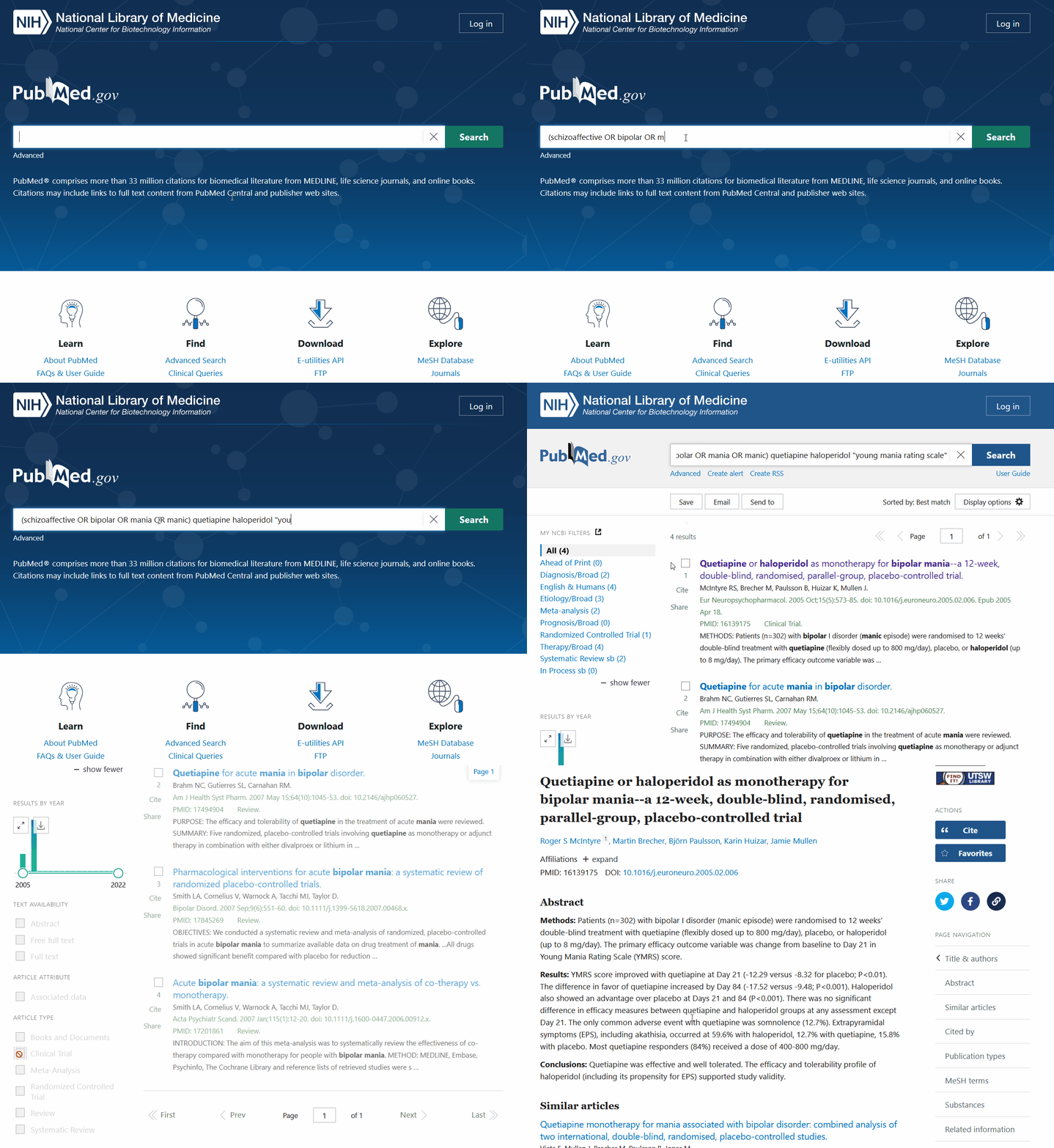
- P - population - (schizoaffective OR bipolar OR mania OR manic)
- I - intervention - quetiapine
- C - comparator/control - haloperidol
- O - outcome (scales) - (young mania rating scale)
16.3 Foreground search
- You would enter this into the search box: (schizoaffective OR bipolar OR mania OR manic) quetiapine haloperidol "young mania rating scale"
- Then I'd filter by clinical trial (but for this search it is not necessary)
16.3.1 PICO search
16.4 Does Risperidone have less EPS than Haloperidol?
17 If you have extra time
17.1 Example: Depression in residency
- Background information?
- Foreground information?
17.2 Background information
- Let's look for review articles.
- Go to pubmed and search for depression (resident OR intern) here.
- many articles, let's filter by review by clicking filters and then the box for reviews
- many results and the first one seems perfect.
- If you are wanting to narrow it down to psychiatry residents you can change the P or population
- so let's search depression ("psychiatry residents" OR "psychiatry interns") here.
- You learn that suicide rate is high in physicians and residents in particular.
17.3 Foreground information
- In depressed medical residents can we prevent suicidality with therapy?
- P = (depressed OR depression) "medical residents"
- I = therapy
- C = leave blank
- O = suicid* which will match suicide, suicidality, suicidal, etc.
- let's search depressed ("residents" OR "interns") therapy suicid* here.